When Mark in Austin noticed soggy rings near the sprinkler heads and brown patches under mature oaks, he assumed the system needed more runtime. After two weeks of longer cycles his water bill jumped and the roots still looked stressed. His neighbor, Maria, with a raised vegetable bed across the street, was overcompensating with a hose and hand-watering that left tomatoes cracked and basil wilting. These are everyday U.S. homeowner problems that come from choosing the wrong watering method or using it poorly.
1. Mistake: Using overhead sprinklers for beds and vegetables — Fix: Switch to targeted drip
The problem: Overhead sprinklers spray a wide area and much of that water evaporates or lands on leaves where plants can't use it. Lawns tolerate broad spray, but flower beds, vegetable rows and the drip-sensitive root zones of shrubs lose water to wind and evaporation. University extension research often reports that targeted irrigation can reduce water use by 30–50% compared with spray irrigation in garden beds.
Why it fails
Sprays apply water quickly to the surface; soil can’t absorb it fast enough, so runoff wastes water and nutrients. Wet foliage also increases disease risk for tomatoes and roses.
Simple fix
Install a drip system for beds and vegetables. Use 1/4" tubing with emitters sized to the crop — e.g., 0.5–2.0 GPH emitters for tomatoes and peppers; 0.5–1.0 GPH for herbs. A small vegetable bed with 10 plants might use 10 emitters at 1 GPH each; running them one hour twice a week during hot spells delivers roughly 1.2 inches of water per week to the root zone without wetting leaves.
For DIYers, a complete kit or modular drip lines makes installation quick. If you want a guided option that pairs the right kit to your raised beds, check how to upgrade to a water-saving lawn with RainPoint—the same approach also helps select drip layouts for veggies and flower beds.
2. Mistake: One-size-fits-all scheduling — Fix: Zone your yard by plant type and sun exposure
The problem: Running the entire system on the same schedule wastes water. Lawns, shade trees, drought-tolerant perennials and potted plants all have different needs. A single runtime will overwater some areas and under-water others.
Why it fails
A shaded lawn needs significantly less water than a full-sun slope. Research from programs like EPA WaterSense shows that smart controllers can save substantial water by tailoring schedules; some homeowners see savings of hundreds to thousands of gallons per season depending on lawn size and climate.
Simple fix
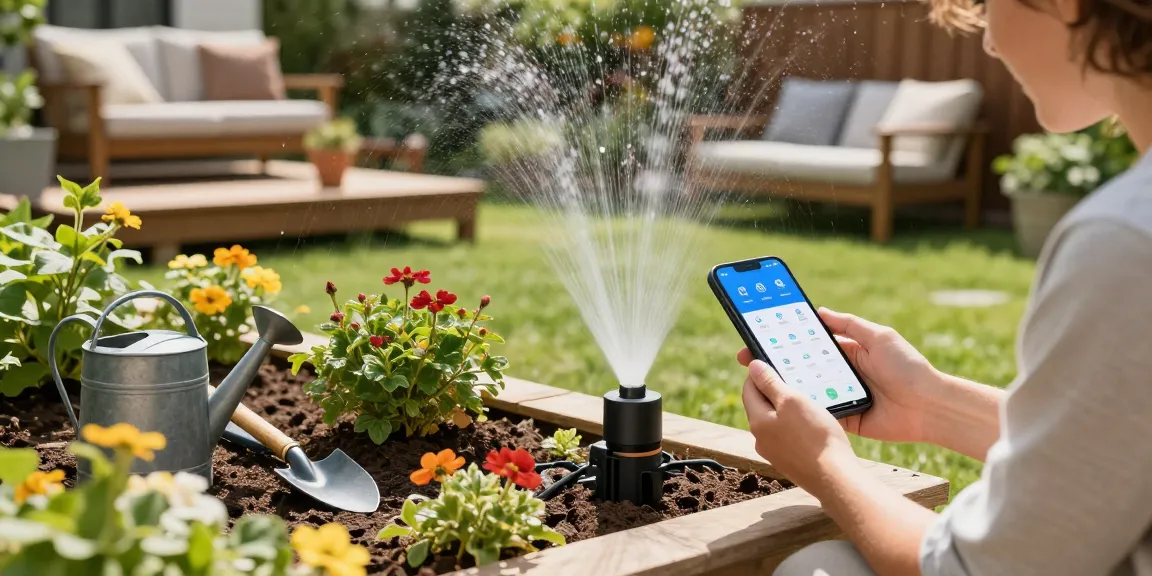
Create distinct irrigation zones: turf, beds with drip, hanging pots, and mature trees. Match the hardware: pop-up spray heads for turf, drip lines for beds, soaker hoses or larger emitters for shrubs, and slow deep-watering for trees. Use a WiFi sprinkler timer or smart controller to assign different run times and frequencies per zone. A WiFi timer from RainPoint can handle that schedule automatically and let you adjust from your phone after a weather front moves through.
Example schedule (mid-summer, temperate climate):
ZoneFrequencyDurationTurf (full sun)3×/week20–25 min per stationFlower beds (drip)2–3×/week45–60 min at low GPH emittersVegetable beds (drip)3–4×/week30–60 min depending on soilPotted plantsDaily to alternate days10–30 min micro-drip
3. Mistake: Installing drip or soaker lines without pressure regulation — Fix: Match pressure and add a filter
The problem: Many homeowners hook drip tubing directly to a high-pressure faucet or lawn system. High pressure can blow fittings, cause uneven emitter flow, or pressurize soaker hoses into inconsistent weeping. Dirt in the water clogs emitters and creates dry patches.
Why it fails
Emitters are rated for specific pressures (often 8–25 psi). Above that, flow becomes unpredictable. Unfiltered water from irrigation mains carries sediment that will clog tiny orifices.
Simple fix
Install a pressure regulator and a sediment filter before the drip manifold. For typical residential systems, use a 25–30 psi regulator ahead of 1/4" lines and a 40–80 mesh filter for municipal water or larger for well water. If you have a long run (over 100 ft), add pressure-compensating emitters to keep flow uniform across the row. This upgrade stabilizes performance and prevents troubleshooting headaches.
Concrete example: Darla in Phoenix fixed uneven tomato growth by adding a 30 psi regulator and a 120-mesh filter; her drip row that previously had dry areas now maintained steady 1 GPH flow across all emitters.
4. Mistake: Relying on runtime alone rather than soil moisture — Fix: Use sensors or check soil by hand
The problem: Timers schedule water by minutes not by how wet the soil actually is. After a rainstorm or during cooler weather, scheduled irrigation can overwater. Conversely, relying purely on calendar schedules during heat waves under-waters plants.
Why it fails
Soil type greatly affects how much water is available to roots. Sandy soils drain fast and need more frequent watering; clay holds moisture longer. A one-size schedule ignores these differences.
Simple fix
Add a soil moisture sensor or probe to your irrigation system, or perform quick hand checks: dig 2–4 inches into a bed — if the soil there feels moist, skip watering. Smart controllers that accept soil moisture sensors will suspend or delay cycles based on real conditions, saving significant water. According to EPA guidance, smart controllers that use local weather or sensor inputs can reduce outdoor water use significantly—often by 20% or more depending on local climate and existing practices (EPA WaterSense).
Practical example: A homeowner in Atlanta added a moisture sensor to a drip zone and avoided two unnecessary weekly runs during a rainy month, saving hundreds of gallons.
5. Mistake: Choosing the wrong system size — Fix: Right-size your setup for area and plant demand
The problem: Underpowered systems starve plants; oversized systems waste water and money. Some people try to water a large lawn with portable soaker hoses or treat a large area with point-emitter drip lines — neither is optimal for scale.
Why it fails
Soaker hose excels in narrow beds; drip with emitters is better for linear rows; pop-up sprinklers are designed for turf coverage. Expect performance drops when the wrong tool is used at scale — e.g., soaker hoses in wide lawn areas create patchy coverage and uneven rooting.
Simple fix
Match the system to the job: small lawns or rental properties often work well with mobile or aboveground micro-sprinklers. Large lawns benefit from in-ground pop-up spray or rotor systems run by a multi-zone controller. Vegetable gardens thrive with close-proximity drip emitters. If you need a multi-approach yard, combine systems and control them by separate zones so each area gets the right type of delivery.
Example pairing guide:
- Small patch of turf (under 600 sq ft): portable micro-sprinklers or soaker hose on a timer.
- Large lawn (over 1,500 sq ft): in-ground rotors on a smart multi-station controller.
- Vegetable beds/rows: emitter drip lines with pressure regulator and filter.
- Flower beds and shrubs: 1 GPH drip emitters or soaker tubing for root-zone watering.
- Potted plants: self-watering spikes or a slow micro-drip loop.
A staged approach saves cost: begin with drip for beds and pots, then expand to turf when you’re comfortable with zoning and scheduling. For help selecting a system that fits your yard’s mix of turf and plantings, a WiFi sprinkler timer such as the RainPoint model lets you add zones gradually and test run-times from your phone.