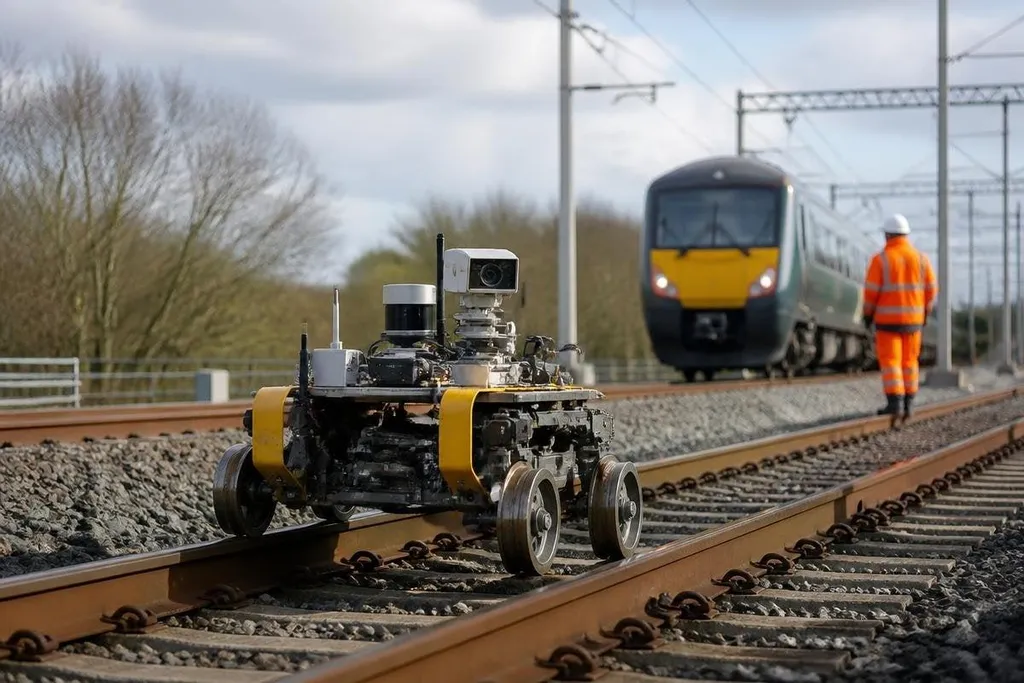
Railway robots are moving toward work that is slow, dangerous, or hard to repeat by hand: track inspection, tunnel checks, vegetation cutting, and repair support. The test will be simple. Can a robot collect useful data and work safely beside trains, workers, and live electrical systems?
- Inspection robots can check rails, sleepers, tunnels, and overhead equipment.
- Sensors turn cracks, heat, vibration, and loose parts into data for engineers.
- Remote control will remain part of railway work when conditions fall outside the robot’s limits.
What these robots need to do
A railway robot has to move over steel rails, ballast, crossings, slopes, and service paths. That makes wheel design, suspension, braking, and traction part of the job, not small details added after the software is ready.
Inspection is the clearest use. Cameras can record the rail and nearby equipment, while ultrasonic sensors can look for faults below the surface. Thermal cameras can show hot bearings, damaged electrical parts, or other changes that a normal image may miss.
The robot also needs a way to locate each finding. Global navigation satellite system signals can fail in tunnels, cuttings, and areas covered by bridges, so the robot may need LiDAR, cameras, inertial sensors, or trackside markers. These systems compare the robot’s movement with its surroundings and help place a fault at a known point on the line.
Autonomy has a narrow job
Autonomous operation means the robot can follow a planned route, avoid obstacles, stop when a sensor sees danger, and send data back to a control room. It does not mean the robot can safely make every decision without a person.
That difference matters on railways. A plastic bag, fallen branch, animal, maintenance worker, or change in track access can turn a planned run into a safety event. The robot needs clear stop rules and a reliable link to the person supervising it.
A full railway route can expose faults that a short product clip leaves out: blocked access, signal loss, and stop events. Reports on railway robots from Robot 24 can show the route, operator, and test result behind a claim, so a repair team can judge whether the machine fits work beside the track.
The same rule applies to repair robots. A machine that carries tools or removes damaged material may reduce time beside the track, but its safe use depends on isolation procedures, work permits, communications, and a clear handoff to railway staff.
The limits that still matter
Railway environments change from one route to the next. Rain can affect cameras, dust can cover lenses, steel structures can confuse sensors, and radio links can weaken in tunnels. A robot that works on a dry test track may need a different sensor mix on a busy freight line.
Battery life also sets the work window. A robot must have enough power to reach the inspection area, run its sensors, return to a safe point, and wait if a train or worker blocks the route. Charging time belongs in the work plan too.
Data quality is another limit. A large folder of images does not help an engineer if the robot cannot link each image to a rail section, time, direction, and sensor reading. The useful system is the one that turns a fault into a clear maintenance task.
I’d wait for route records and safety results before treating any railway robot as ready for wide use.
A buying check for railway operators
Before a trial begins, check these points with the supplier and the railway safety team:
- Route access: Confirm where the robot can run, where it must stop, and how staff remove it from the track.
- Fault records: Require each finding to include location, time, image data, and the sensor that produced it.
- Bad conditions: Ask for results from rain, dust, low light, tunnels, slopes, and areas with weak communications.
- Human control: Check how an operator stops the robot, takes control, and confirms that the route is clear.
- Service plan: Price batteries, sensor cleaning, replacement parts, software updates, and staff training.
The next railway robots will earn trust through repeatable inspection runs, clear stop behavior, and records engineers can act on. Until those results are available for a named route, the sensible measure is the work completed safely on one line, not the number of features in a demonstration.